What Is Closed-Cell Foam — and Why the Best Pool Floats Never Need a Pump (2026 Guide)
You've seen it on the label. "Closed-cell foam." It sits there next to a price that's triple what the big-box inflatable costs, and some part of you wonders whether it's a real spec or just the pool-float version of "artisanal." Fair. Most of what's printed on a float's packaging is marketing.
That phrase isn't. If you've been trying to decode closed-cell foam pool floats — what the material actually is, whether it earns the price gap, why every foam float we make uses it — this is the full explanation. We build floats out of this material for a living, so we'll show you exactly what's behind the label: the cell structure, the thickness numbers, the coating, and the honest cases where a different material wins.
What Is Closed-Cell Foam, Exactly?
Closed-cell foam is a solid material made of millions of microscopic air pockets, each one sealed off from its neighbors — so water can't seep in, air can't leak out, and the buoyancy is built into the material itself rather than pumped in and hoped for. Picture bubble wrap shrunk down a few hundred times and fused into a solid slab. Every cell is its own tiny, permanent flotation device.
That structure is the entire story. A closed-cell float doesn't depend on a valve holding its seal, a seam staying welded, or a skin staying puncture-free. There's no air chamber to fail, because there's no air chamber at all. The float isn't holding the flotation. The float is the flotation.
The Three Ways a Float Can Hold You Up
Every pool float on the market keeps you above water with one of three structures. Learn to tell them apart and you can predict how any float will age before you've paid for it.
Closed-Cell Foam: Buoyancy Built Into the Material
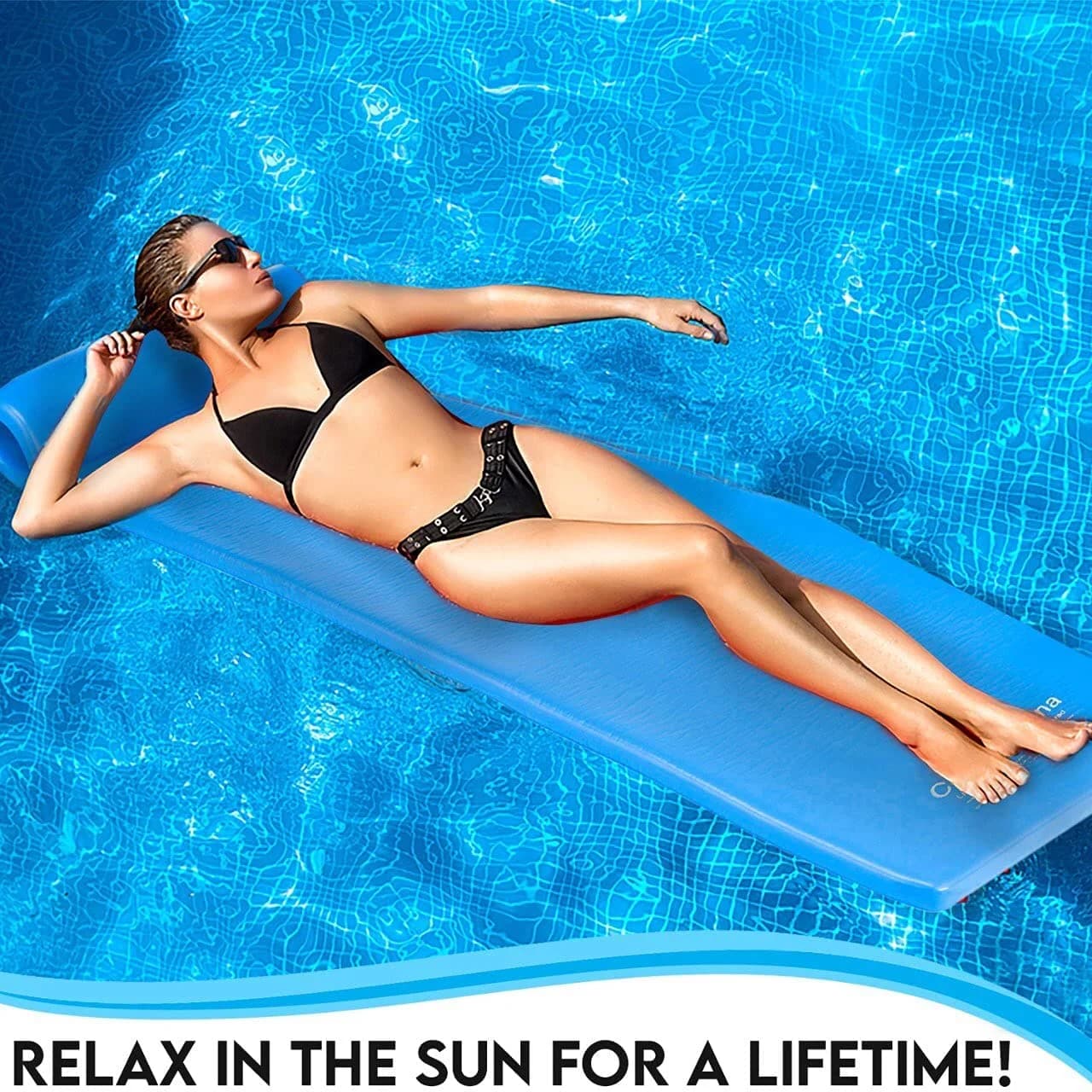
Sealed cells, solid core. The lift you feel at hour three is identical to the lift at minute one, because nothing is escaping and nothing is soaking in. There's no setup tax either — no pump, no valve, nothing to check. Grab it, drop it in the water, you're floating. This is the structure that makes a float feel less like a toy and more like furniture, and it's the only one of the three that skips maintenance entirely.
Open-Cell Foam: The Sponge Problem
Open-cell foam is the opposite architecture — the cells connect to each other, which is exactly what makes a kitchen sponge a kitchen sponge. It's soft, it's cheap, and it drinks. In the water, an open-cell pad gets heavier as the session goes on, dries slowly, and once moisture reaches the core it can linger long enough to grow things you don't want to think about while lying down. Open-cell is a fine material for couch cushions and mattress toppers. A pool is the one place it has no business being.
Inflatables: Buoyancy You Have to Maintain
An inflatable is an air bladder wrapped in thin PVC film — buoyant only as long as you keep it that way. You're the quality-control department: pump it up, check the valve, watch the seams, patch the pinholes, top it off as it softens through the afternoon. In fairness, inflatables keep one genuine advantage: they pack flat. We sell an inflatable lounge chair ourselves, and for suitcases and rental-house weeks we recommend it with a straight face. But for the float that lives at your own pool, air is a subscription. Foam is a purchase.
The Spec, Applied: Our 2026 Closed-Cell Lineup
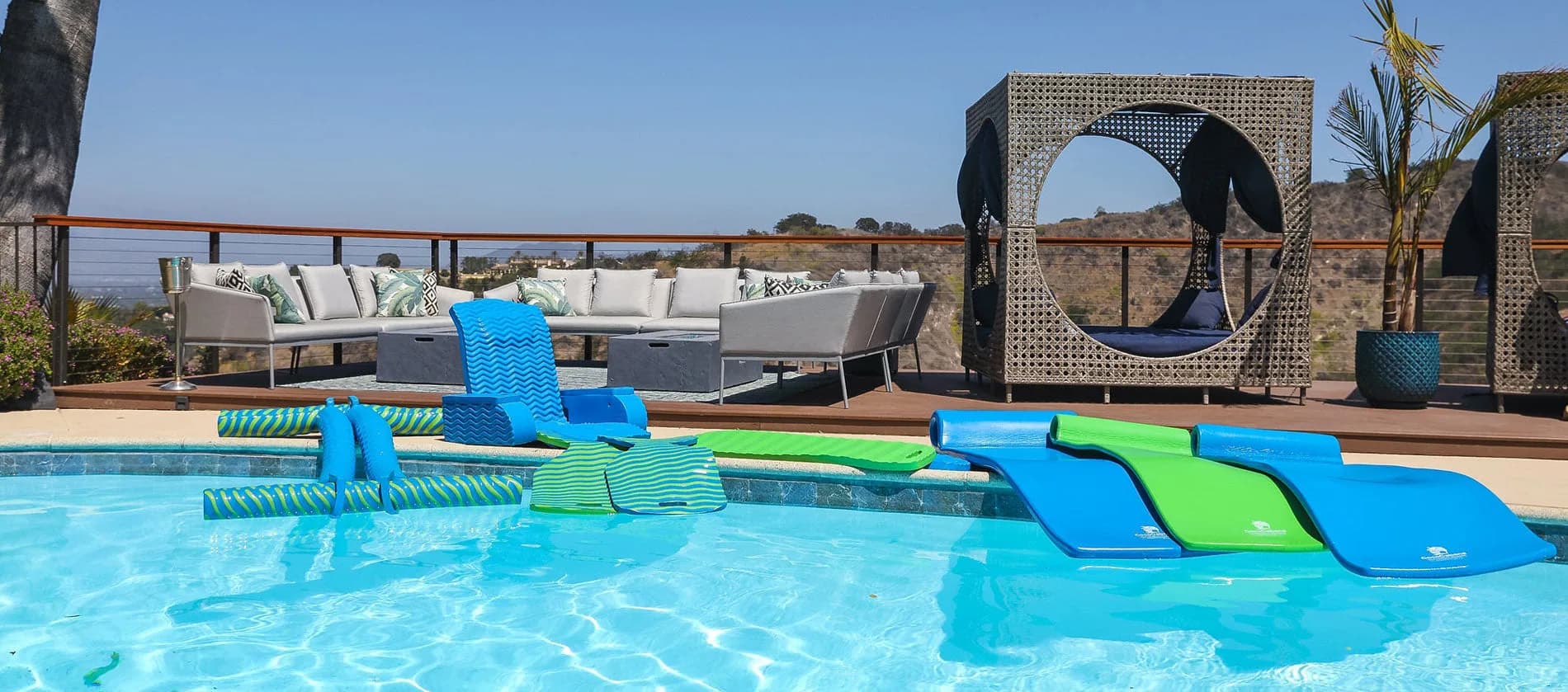
We're biased — every foam float we make is closed-cell, so of course we think the material wins. But building with it every day is also why we can tell you what the label numbers mean instead of waving at the word "premium." The material story is identical across our lineup; what changes is the shape it's cut into. (For ranked picks and sizing help, our complete 2026 foam float buying guide does that job — this is the why underneath it.)
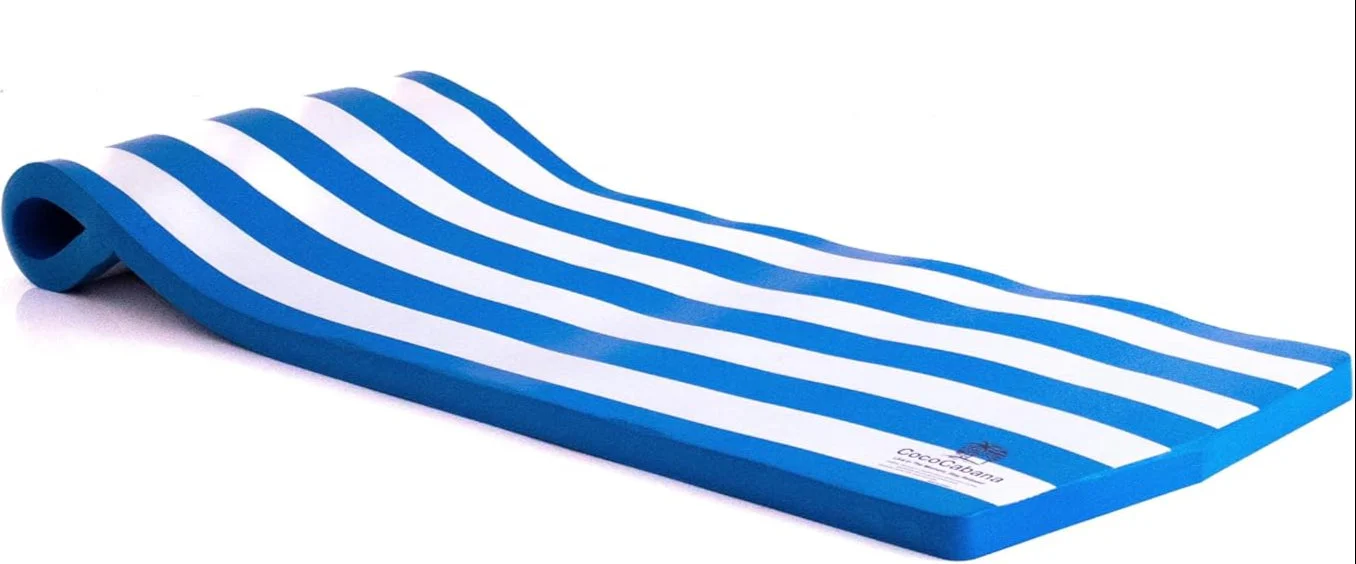
The Cococabana 74-Inch Foam Pool Float is the fullest expression of the spec — six feet of closed-cell foam under a vinyl skin, with an integrated headrest, in Pacific Blue or Pink plus striped versions of both. It's the only float in the lineup where you choose your foam thickness, and the whole thing still weighs under ten pounds. If closed-cell foam has a flagship, this is it.
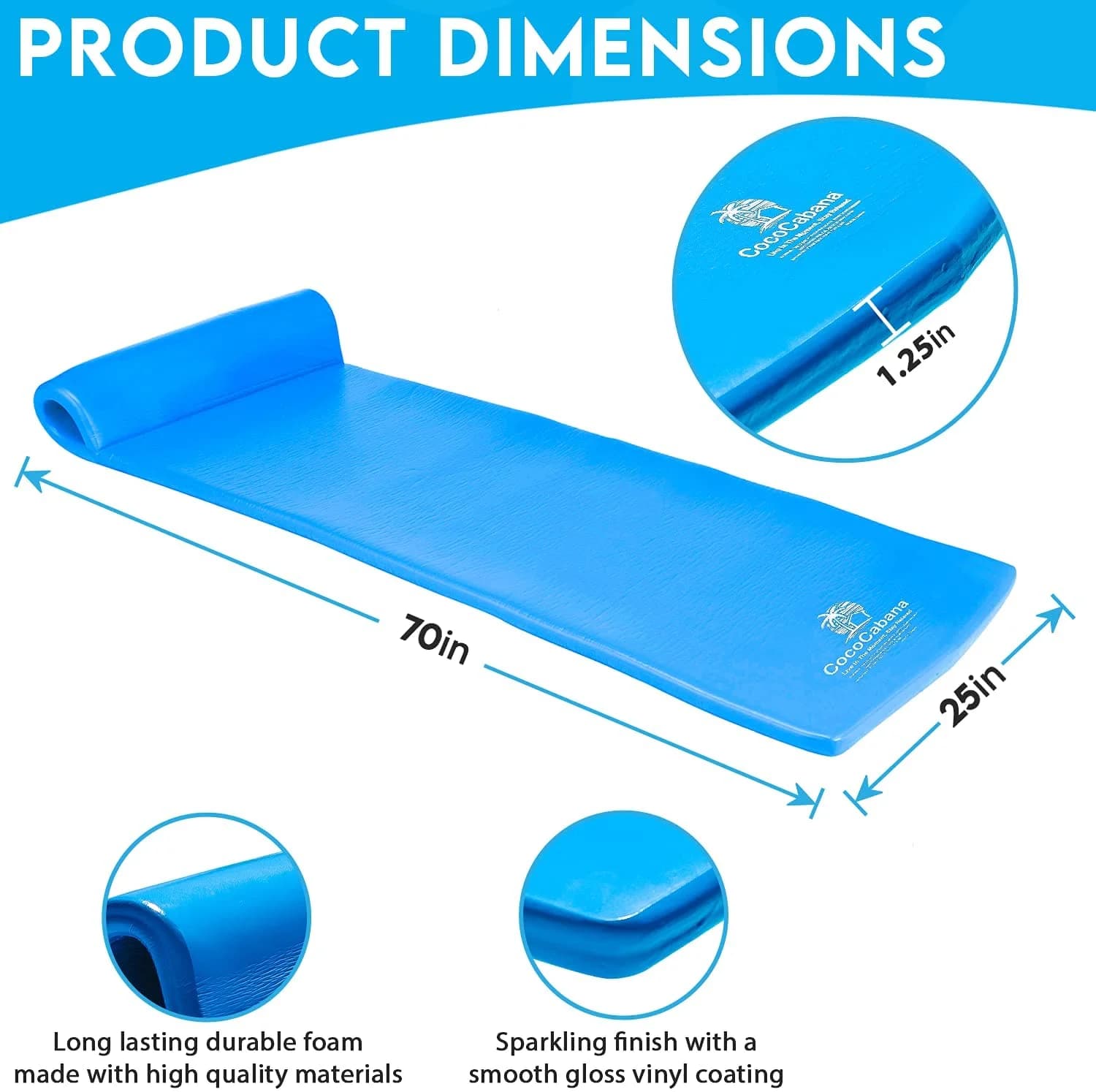
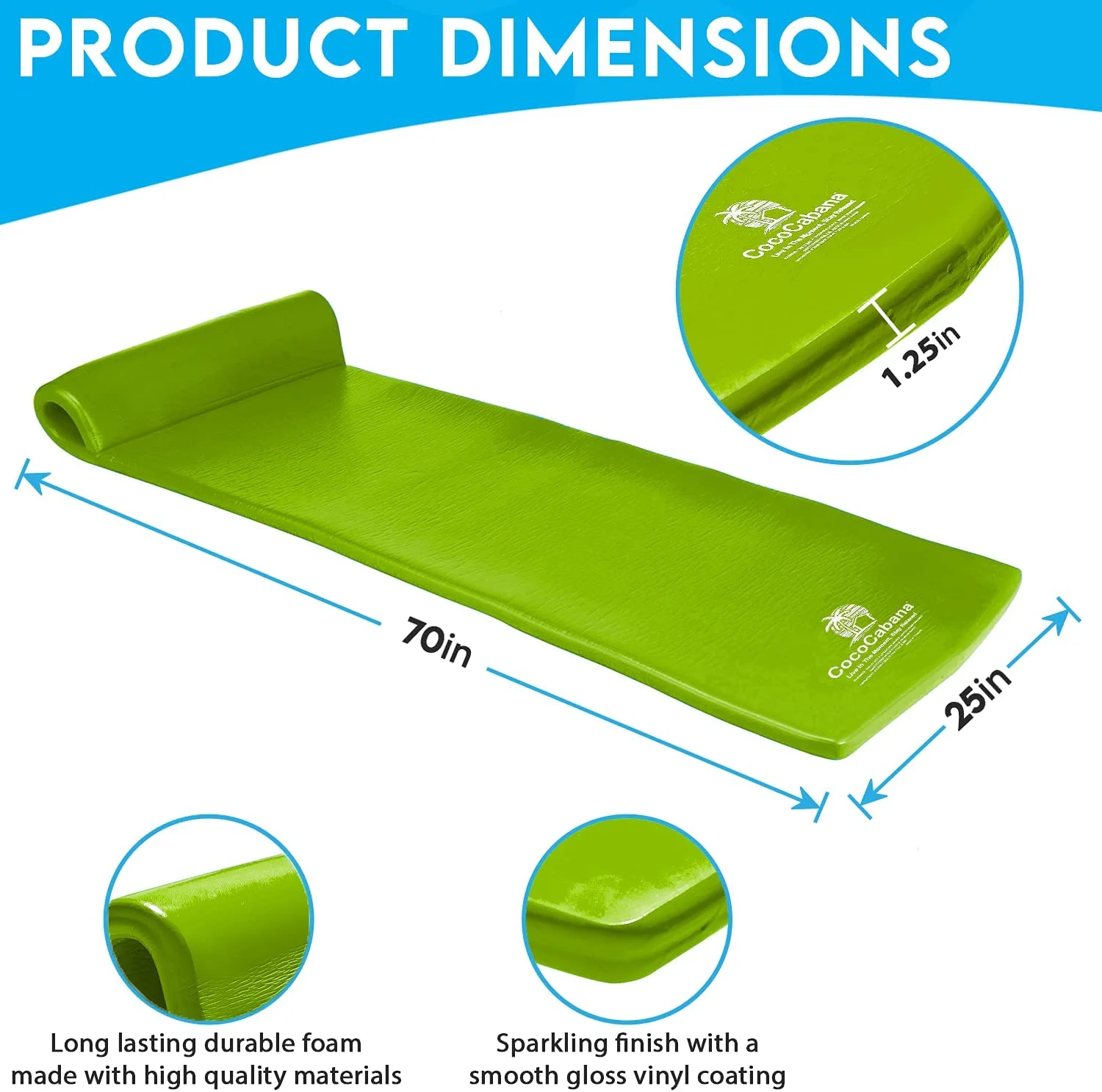
The 70-Inch Foam Pool Float is the same material tuned for smaller pools and tighter storage: 70 by 25 inches, a deliberately compact 1.25-inch profile, $99.99, in Pacific Blue or Key Lime. Identical chemistry, easier real estate.
The Whale Tail Pool Float Saddle is the cheapest way to own the material — $34.99 for a 1.5-inch-thick vinyl-coated foam saddle you can sit on, lean on, or lie across (32 by 15 inches in Pacific Blue; 36 by 18 in Key Lime). If you're material-curious but not $150-committed, start here.
Does the 4-in-1 Water Hammock Use the Same Foam?
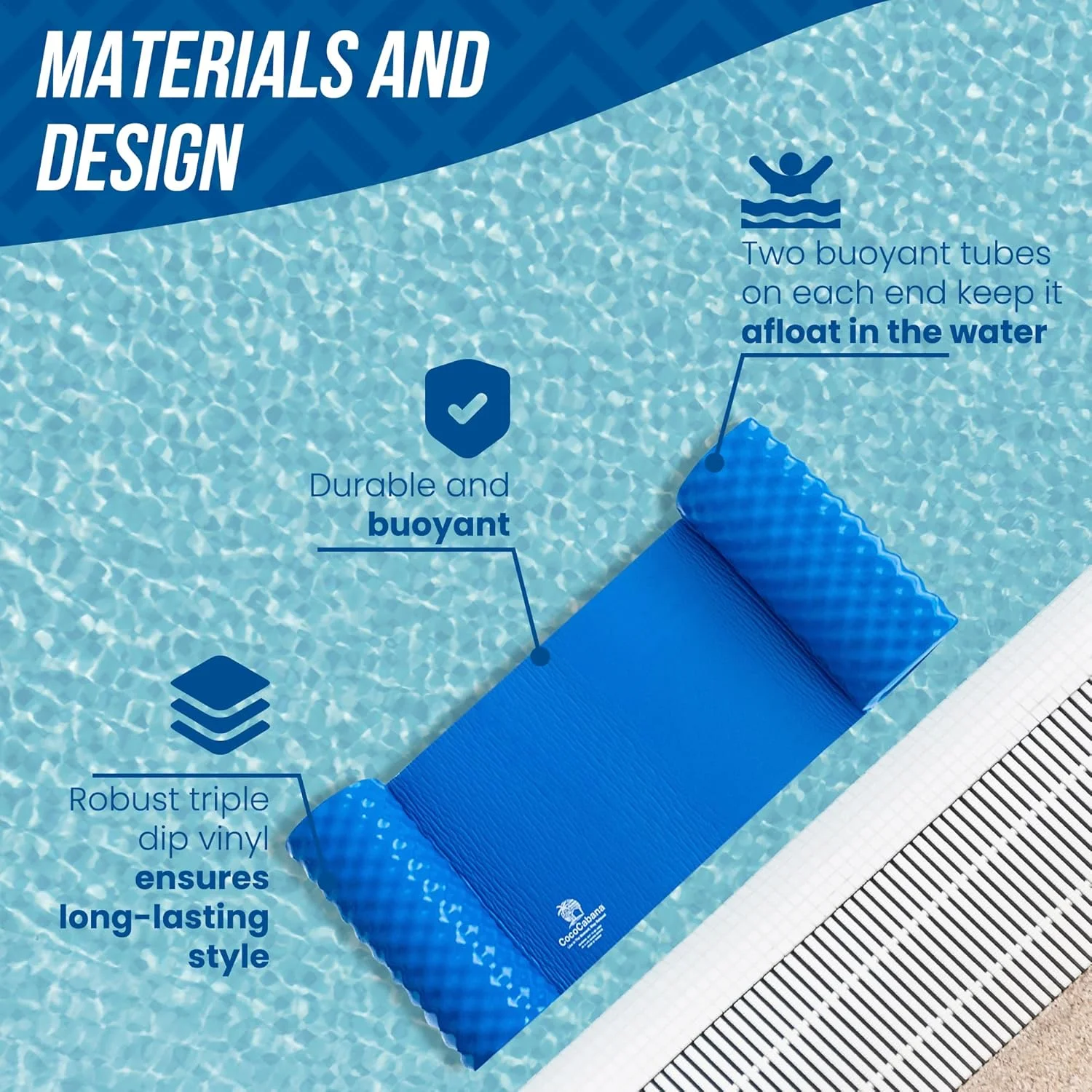
Yes — and it's the best demonstration of what the material makes possible. The 4-in-1 Water Hammock is a 48-by-24-inch closed-cell core with a triple-dip vinyl coating, shaped into two buoyant rolls and a flexible center. That's why one $99.99 float works as a hammock, a chair, a saddle, and a drifter with no pump anywhere in the equation — the foam holds its shape and its lift no matter which mode you fold it into. We wrote a full explainer on how the four modes actually work if that shape is calling to you.
Is Closed-Cell Foam Waterproof?
For every practical purpose, yes: closed-cell foam doesn't absorb water, because there's no connected path for water to travel into the material. Strictly speaking, "waterproof" describes a surface, and on our floats the surface does its own work — a vinyl coating sealed over the foam core. Two independent layers: a skin that keeps water out, over a structure that couldn't soak it up anyway. Belt and suspenders. Your float comes out of the pool the same weight it went in — every time, all season.
The Numbers Behind the Label
Material quality is the first of the four markers we laid out in what makes a pool float luxury — get the material wrong and nothing else on the spec sheet can save the float. Here are the three numbers that matter and where ours land.
Foam Thickness: 1.25 to 2.5 Inches — and Why It's a Choice
Thickness is where buoyancy and cushion live, and it's the number most brands won't print. We put it on the order form. The 74-inch comes in three foam thicknesses — 1.5 inches at $109.99, 2 inches at $149.99, and 2.5 inches at $199.99 — because a float you use twice a month and a float that's effectively outdoor furniture shouldn't be built the same. Floating a couple of weekends a summer? The 1.5-inch gives you plenty of lift. If you're in the water most days, take the 2-inch. The 2.5 is for people who want a daybed that happens to be in the pool.
The 70-inch runs 1.25 inches on purpose — tuned thin so the whole float stays light enough to carry one-handed from the garage. Thicker foam means more cushion and more buoyancy. It doesn't automatically mean better; it means built for a different day.
The Vinyl Skin: What the Coating Is Actually For
Bare foam would still float beautifully, but pool water is a chemistry set. The vinyl coating on every float we make is what shrugs off chlorine, UV, saltwater, and sunscreen buildup — the four-way combination that kills cheap floats in a single season. On the water hammock and our Paradise chair it's a triple-dip coating — the core takes three passes through the vinyl bath, building up a thicker skin on the pieces that get folded and sat on hardest. That same coated-core construction is how the Paradise — chair-shaped, same material — supports adults up to 250 pounds without the buoyancy fading over a three-hour sit. The foam does the floating. The skin keeps the chemistry off it.
How Long It Lasts: Five to Ten Years
With basic care — rinse after swims, dry in the shade, store flat or upright — a vinyl-coated closed-cell float is a five-to-ten-year purchase. Run the arithmetic once and the price gap inverts: $149.99 over seven summers is about $21 a season. A $35 inflatable replaced every season and a half costs more than that and buys you a worse afternoon. The expensive float is the cheap one. It just pays up front.
What Owners Notice After the Switch
Read our reviews and a pattern shows up fast: nobody raves about cell structure. They rave about the absence of chores. The 74-inch holds a 4.5-star average across 255 reviews; the little Whale Tail sits at 4.8. And one review tells the material story better than we can:
"We bought this last year for our pool & we absolutely love it! It is truly unsinkable!" — Kathryn C., on the 74-Inch Foam Pool Float
A year in the water, and the word she reaches for is "unsinkable." That's the spec sheet, translated.
Try the Material Once
Here's the honest sales pitch: closed-cell foam is a try-it-once material. Nobody floats on real foam for an afternoon and then goes back to the pump. We're mid-season as you read this, and foam floats tend to sell out as summer peaks — if you've been circling one all July, this is the window. Browse the full luxury foam pool floats collection and pick your thickness.
Because the best pool float isn't the one with the boldest graphics or the deepest launch-day discount. It's the one built from a material that's still holding you — silently, with zero maintenance — four summers after the inflatables have been patched, deflated, and thrown away.