What Makes a Pool Float "Luxury"? — The Honest Answer
Walk into any pool supply aisle and you'll find dozens of pool floats labeled "luxury" or "premium" or "designer." The same word covers a thin vinyl mat with a fancy graphic and a foam lounger built for years of use. Most of them haven't earned the term.
This post is the argument for what "luxury" should actually mean when it comes to floating in your pool — the markers worth paying for, the markers worth skipping, and the line between a real luxury pool float and one that just calls itself one.
What Luxury Doesn't Mean
The marketing department's version of luxury is mostly aesthetic. A glossy magazine-style product photo. A pastel color palette. Maybe a metallic logo embossed on the surface. Slap a sticker that says "premium" on the package and the price goes up.
None of those signals are wrong, exactly — they're real things that real luxury products often have. But they're surface-level. A cheap inflatable can look gorgeous in a photo, last barely past the first big party of the summer in real use, and never deserve the word "luxury" in any meaningful sense.
Three claims in particular have been so overused they've stopped meaning anything:
"Premium materials" usually translates to thicker vinyl than competitors. Not nothing. But also not enough — the construction underneath the vinyl matters more than vinyl thickness alone.
"Designer style" almost always means a recognizable visual identity, not a designed (engineered) product. A float can have a designer-style print and the same flimsy construction as the no-brand version next to it on the shelf.
"Built to last" is the easiest claim to make and the hardest to verify before you buy. Most pool floats marketed as "lasting" fail in the same ways the cheap ones do — just with a longer marketing runway between purchase and failure.
None of these claims are necessarily wrong — they're just so devalued by overuse that you can't take them seriously without checking what they actually mean. Cheap floats borrow the marketing language of luxury floats; the language gets thinner each time it's borrowed.
The Markers That Actually Matter
Luxury in pool floats isn't about price tags or product photography. Luxury swimming pool floats — the ones built to survive chlorine, UV, and weekly use across multiple summers — earn the word through four specific things that separate them from floats that end up in the trash by August.
Material That Doesn't Degrade
The first marker is material that survives the pool environment without breaking down. Closed-cell foam doesn't compress, doesn't absorb water, doesn't lose buoyancy over time. Vinyl coating — triple-dip or comparable — resists UV exposure, chlorine, and saltwater. The cheaper alternatives (thin PVC, single-ply vinyl, untreated plastic) might look indistinguishable on day one, but they fade, crack, and degrade within a season or two. Material that maintains its physical properties through repeated chemical and UV exposure is the foundation. Without it, nothing else matters.
Construction That Holds Shape
The second marker is construction that doesn't depend on air pressure. Inflatable floats rely on pumped-up chambers; lose pressure through valves, seams, or punctures, and you lose the float. Solid foam construction holds its shape without maintenance — no pump, no patch kit, no slow leak. Some luxury inflatables exist, but they require investment in thicker walls and better valves. The cleaner luxury marker is no-inflation-required: the float is ready when you walk outside, every time, season after season.
Body Support That's Engineered
The third marker is real ergonomics, not pool-toy approximations. Integrated headrests that actually support the neck angle. Armrests wide enough and firm enough to hold your weight when you lean. Backrests that hold a comfortable recline instead of a flat angle that strains your neck. These aren't generic features — they're details that take design work to get right. The difference between a chair you sit in for ten minutes and one you stay in for an hour is engineered support.
Design That Integrates, Doesn't Decorate
The fourth marker is design that comes from the engineering, not bolted on top of it. A coordinated color palette, considered surface texture, lines and shapes that look intentional rather than busy. Real design choices emerge from the build — ribbed surfaces that grip, contoured backrests that fit shoulders, materials chosen for both performance and appearance. The opposite is decoration: a graphic print or color stripe slapped on a generic float and called designer. Real design is felt as much as seen.
How Cococabana Applies These Markers
Four markers above. We've applied them to our own products — not because we invented the criteria, but because they're the tests we use when we evaluate whether a float earns its price.
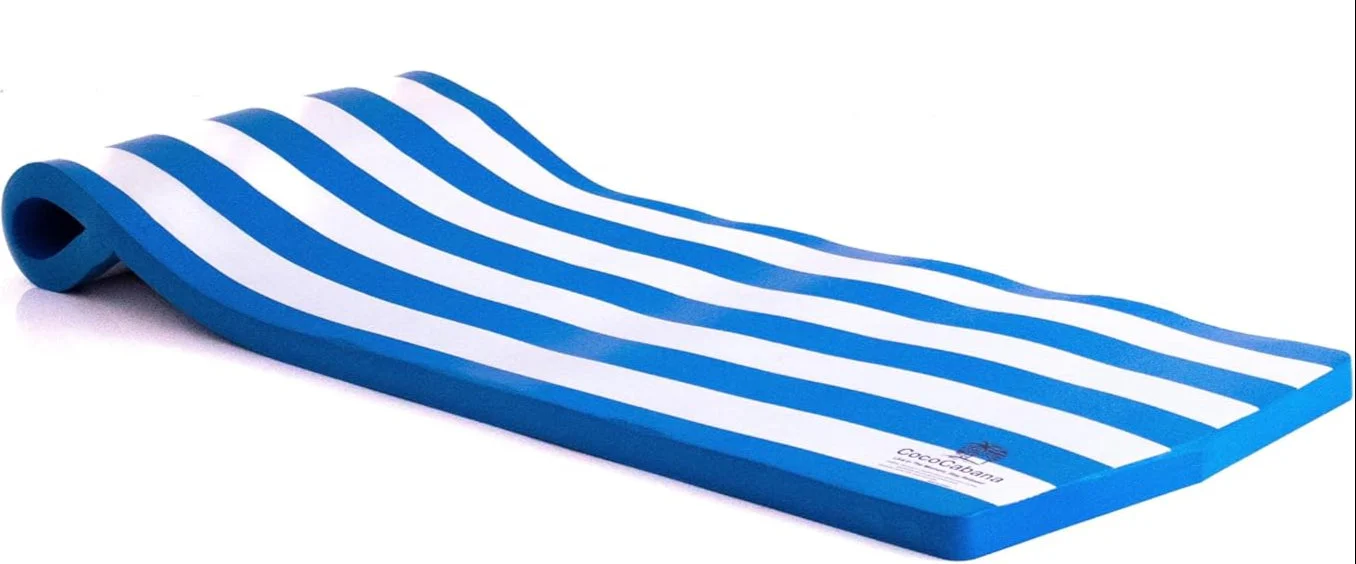
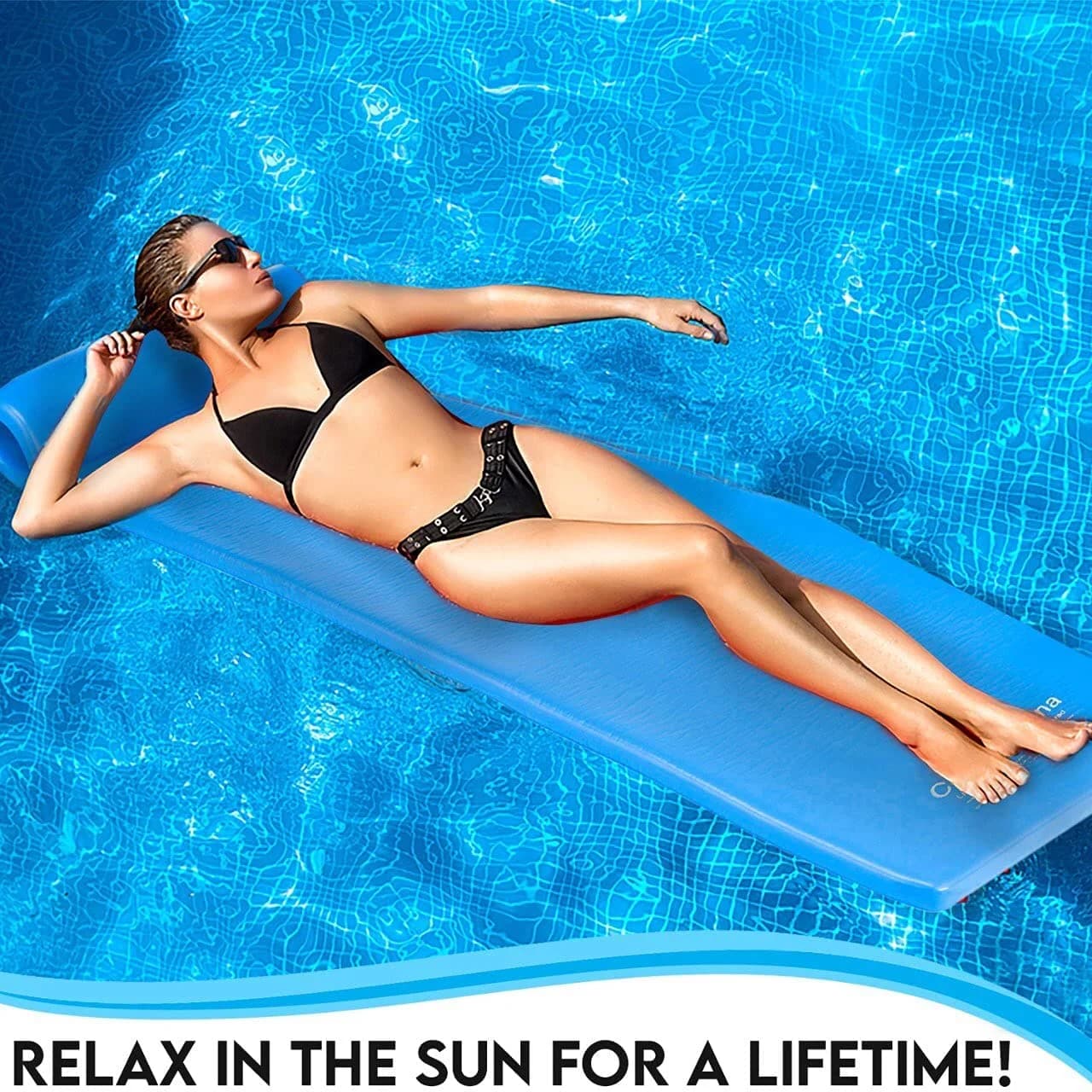
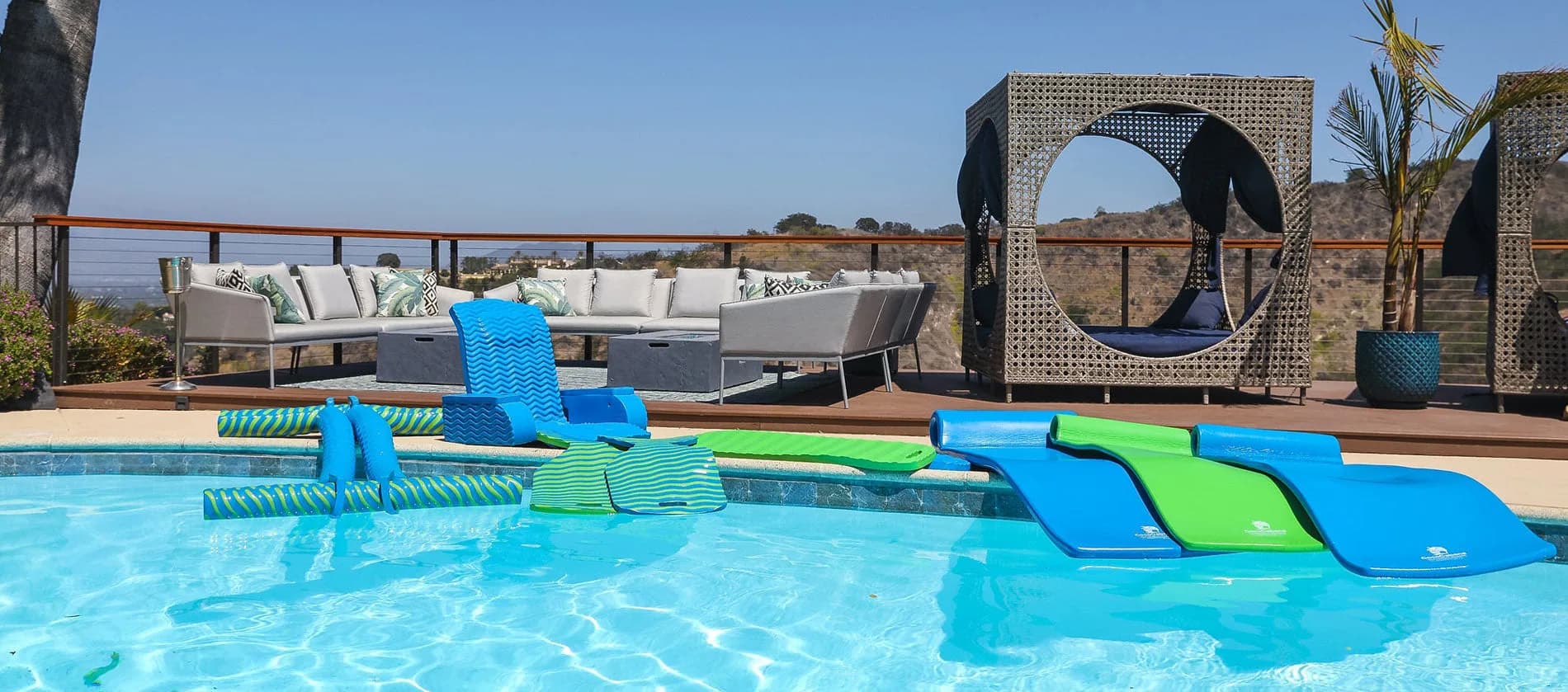
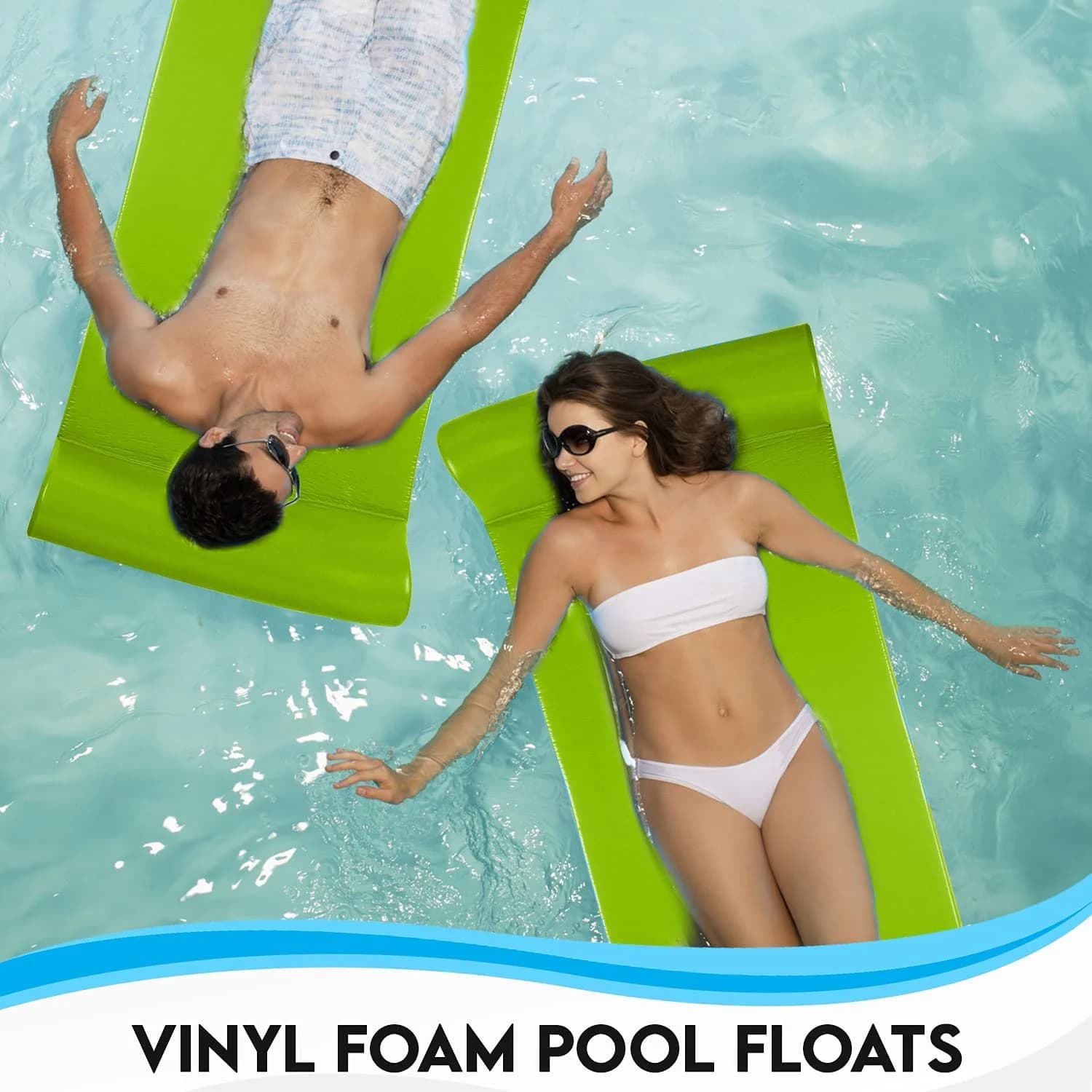
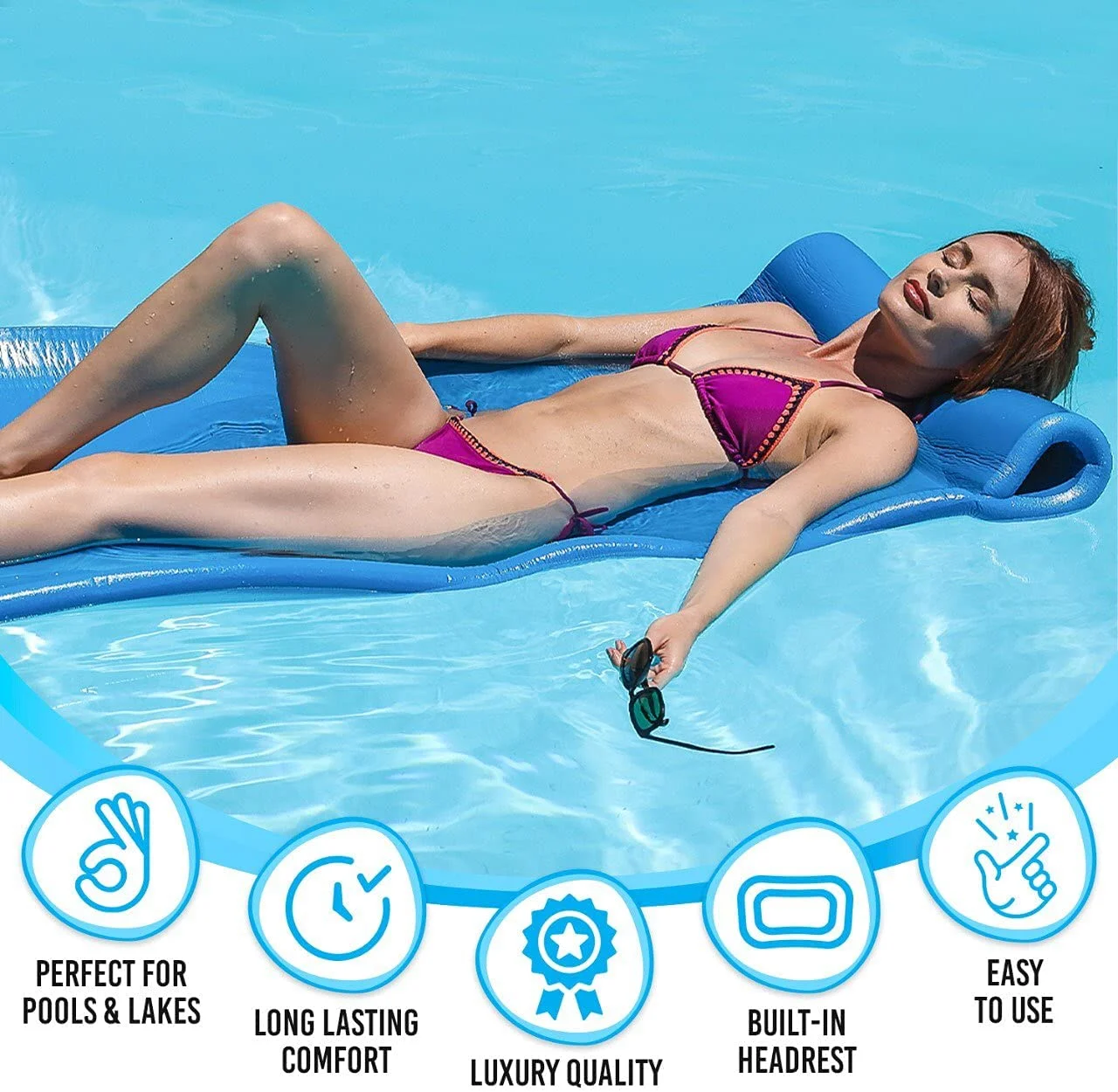
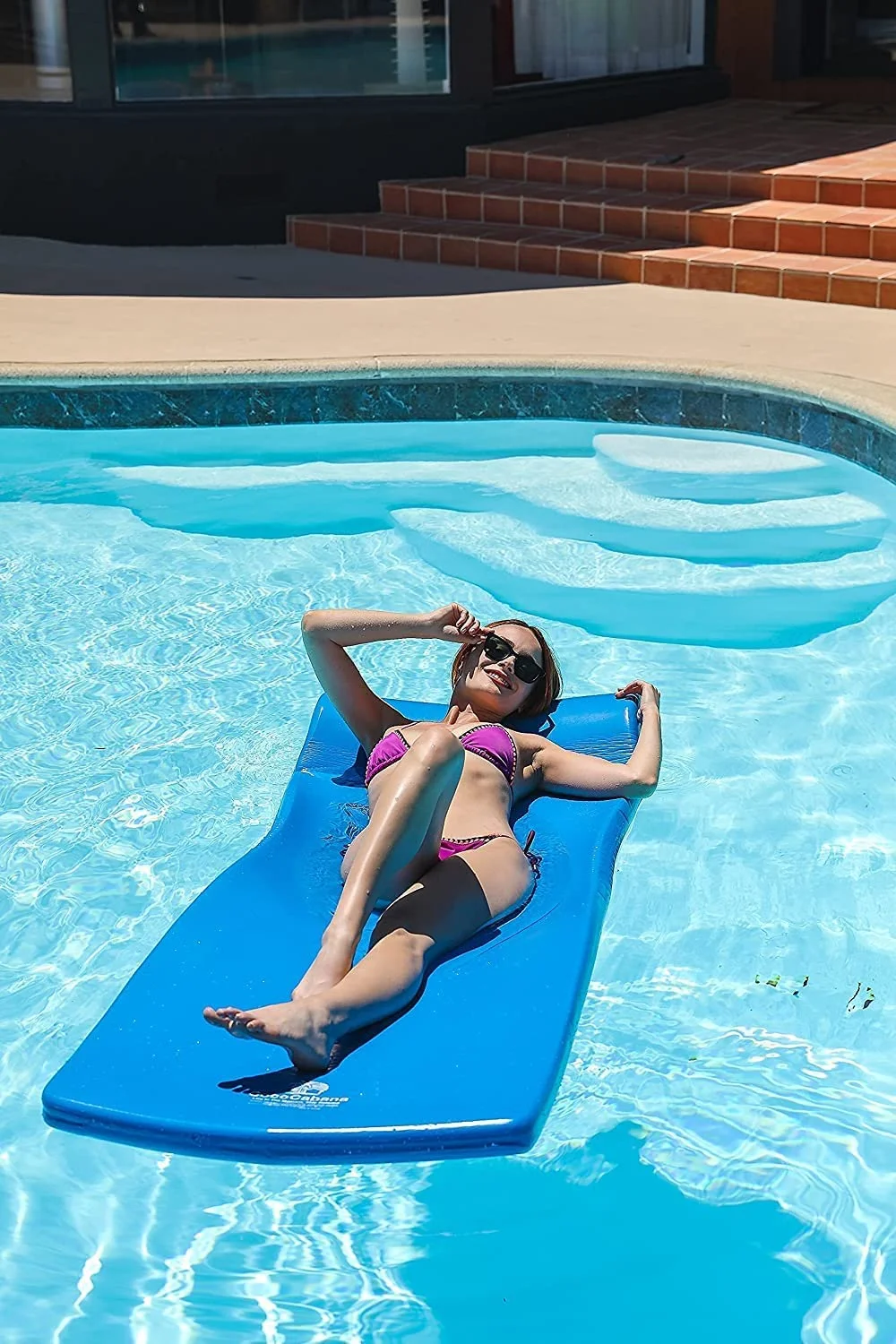
The Cococabana 74-Inch Foam Pool Float and the 70-Inch Foam Pool Float both pass the material test: closed-cell foam wrapped in vinyl coating that resists UV, chlorine, and saltwater. They pass the construction test: no inflation, no patch kit, no slow leaks. The integrated headrests built into the foam pass the body-support test — the headrests are part of the structure, not a separate piece glued on. And the aesthetic (Pacific Blue, Key Lime, Pink, the striped pattern) is design choice, not decoration.
The Paradise Foam Pool Chair extends the same standards to upright seating. Same closed-cell foam, same triple-dip vinyl coating, with armrests that hold weight under load and two molded cup holders. The chair isn't a flat surface with edges — it's an engineered seating position.
The 4-in-1 Water Hammock applies the markers in a different format: same foam, same vinyl, but the geometry transforms (hammock, chair, drifter, saddle) within one float. That's design choice — multi-mode versatility from a single piece of equipment, not from accessory add-ons.
The evaluation isn't subjective. Every product we consider stocking goes through the same four questions: does it survive UV and chlorine over multiple seasons; does it hold its shape without external maintenance; does the body it supports stay comfortable for actual sessions, not just photo-shoot durations; does its appearance read as designed rather than decorated. If any of the four answers is "no" or "mostly," the product doesn't carry the Cococabana name.
Browse our luxury foam pool floats collection to see how the four markers translate into the actual lineup. Each item went through the same evaluation before earning its place there.
Where Luxury Runs Out
Not every pool day needs a luxury float. The thesis above is about what "luxury" should mean when the word is used — not about whether luxury is always the right purchase.
For occasional pool use — once a summer, a backyard rental, a vacation week — a cheap inflatable is the right financial call. You'll use it a few times, leave it at the rental, and not feel a thing. The luxury markers above only pay off if you'll use the float often enough that the marginal upgrade matters in your daily experience.
For kids' floats, luxury is mostly wasted. Kids grow, kids destroy, kids will use it briefly before moving on to the next thing. Spend on something else.
For specific niche uses — a one-off pool party, a photo shoot, a Halloween-themed float for the spooky season — buy the cheap themed thing. The premium versions don't exist for those use cases anyway.
Luxury is for daily-or-near-daily pool use, where the float becomes part of your routine and the markers above translate to real comfort, real longevity, and real savings over multi-summer ownership. If that's not your pool reality, the cheap float wins on cost-per-summer math.
A particularly clean test: if you're using your pool less than weekly across the season, luxury floats are wasted spend. The marginal upgrade matters most when use is frequent enough for small details — the headrest angle, the armrest firmness, the surface texture — to register repeatedly. Float on something twice a summer and you'll never notice the difference between premium-grade and disposable-grade.
Designer vs. Premium vs. Luxury — A Quick Note
Three words get used interchangeably in this category: designer, premium, and luxury. They overlap, but they're not synonyms. Luxury pool accessories — floats, chairs, loungers alike — apply each term differently depending on the product.
"Designer" typically signals visual identity — a recognized aesthetic, a coordinated color palette, a brand-distinctive surface. Designer products lean on look and feel; they can be luxury or not.
"Premium" usually means "better than the cheap version" — thicker materials, better construction, higher price point. Most premium claims are accurate within their category, but premium-grade isn't the same as luxury-grade. A premium inflatable is still inflatable.
"Luxury" is the strongest claim and the rarest one earned. Luxury implies all of the above plus the markers we covered: material that doesn't degrade, construction that holds shape without inflation, engineered body support, integrated aesthetics. A product can be designer-styled and premium-priced without being luxury.
When evaluating any pool float marketed with these terms, check which claim is being made and whether the product earns it. The cheaper the float, the more likely you're looking at designer or premium marketing wearing a luxury sticker.
What to Do With This
Take the four markers as a checklist next time you're buying any pool float that calls itself luxury. Material that doesn't degrade. Construction that holds shape. Body support that's engineered. Design that integrates instead of decorates.
If a float doesn't pass all four, it might still be a fine purchase — but it's not a luxury one. Don't pay luxury prices for premium-grade construction. Don't avoid luxury when the use case demands it.
Practical rule: if you can't tell the difference between two floats in a side-by-side comparison, you don't need the more expensive one. Luxury is about felt differences, not paper differences. A buyer who can pick out the engineered headrest, the firm armrest, the vinyl that won't fade is the buyer for whom luxury earns its premium. A buyer who can't is the buyer who should save the money — and there's nothing wrong with being either one.
For a broader look at the best luxury pool floats and how to build a pool float lineup that pays off over years — what to start with, what to add, and how to think about size and use case — our guide to the best foam pool floats for adults covers the practical buying journey.