Water Hammocks: The Complete 2026 Guide to the Four-Mode Pool Float
It's the second position change that does it. You came out to lie flat and bake. Twenty minutes later somebody's in the water next to you and you want to sit up and talk — except your float only does lying down. So you climb off, swim it to the steps, and go hunting for a different float. Or you don't, and you spend the rest of the afternoon slightly wrong.
That's the problem the water hammock was built to solve, and it's why it's the float we recommend in 2026 to anyone who refuses to own four. One piece of foam, four ways to sit in it. Here's what separates a hammock worth buying from a pool toy, how the four modes actually work, and how to tell whether you want one — or whether a dedicated lounger, chair, or saddle fits your pool days better.
What Makes a Water Hammock Worth Buying
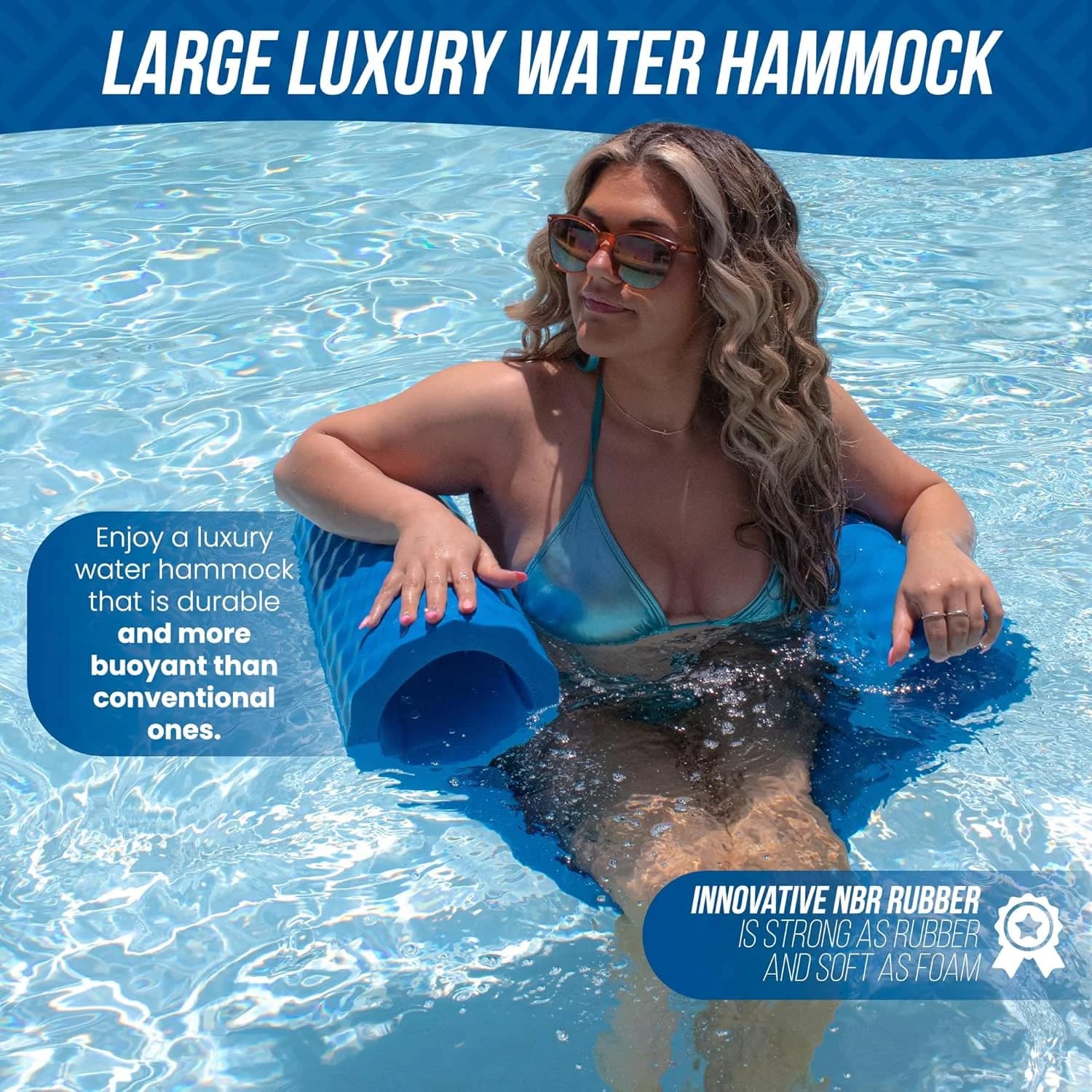
Every water hammock is the same idea: two buoyant rolls, a flexible center panel, and your body suspended in the curve between them. You sit in it, not on it. The execution is where they separate, and after years of watching floats survive — or not survive — real pool seasons, we judge every hammock, including ours, on three things:
- Rolls that hold you up without trying. The rolls do all the flotation work — head on one, legs on the other. If they're soft, undersized, or hollow, your shoulders sink and the cradle becomes a slow dunk. Press them before you buy: a roll you can pinch flat with two fingers will fold under a full-grown adult.
- A center that contours, not collapses. The middle should dip a few inches so your hips ride cool in the water — not drop you through like a wet bedsheet. Solid foam gets this right by default. An air bladder gets it right only for as long as it's perfectly inflated.
- A surface you don't slide off. You change positions on a hammock constantly — that's the whole point of owning one. A ribbed, textured surface grips skin through every switch. Glossy vinyl photographs beautifully and slides out from under you in real life.
Those three tests eliminate most of what's sold as a "water hammock" online — the bargain-bin inflatable versions usually fail at least one straight out of the box.
And there's a fourth factor nobody prints on the package: how the float gets to the water. A hammock you have to pump, pressure-check, and patch is a hammock you'll use less every week you own it. By late July, setup friction is the difference between a float that lives in the pool and one that lives in the garage.
Our Pick for 2026: The Cococabana 4-in-1 Water Hammock
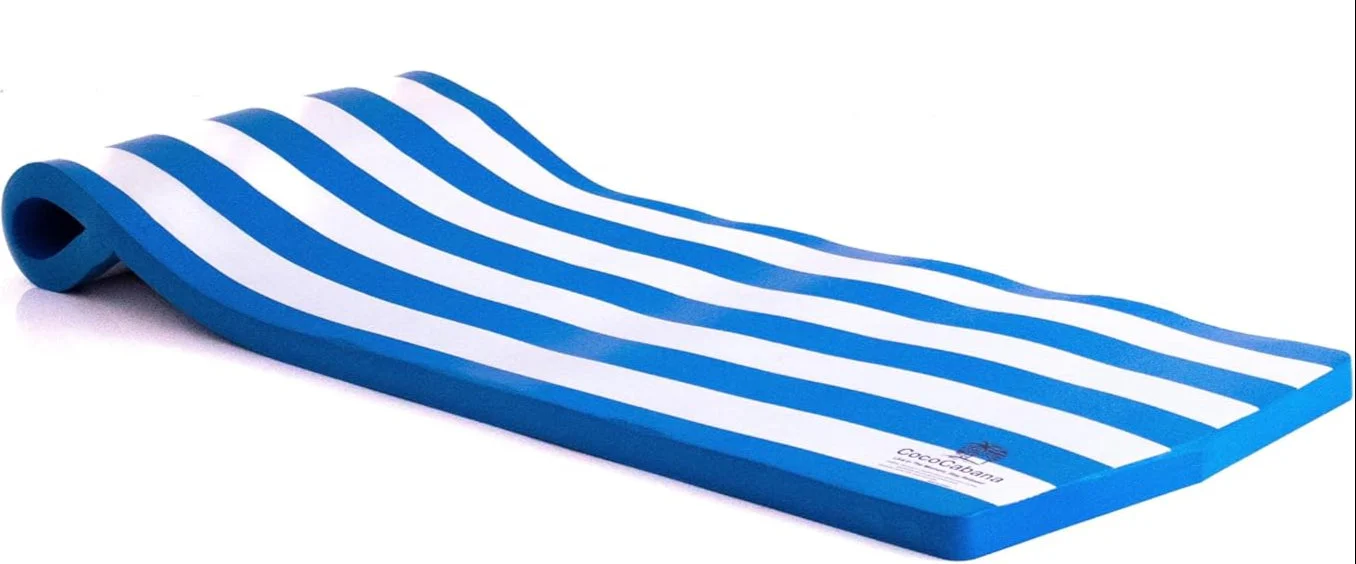
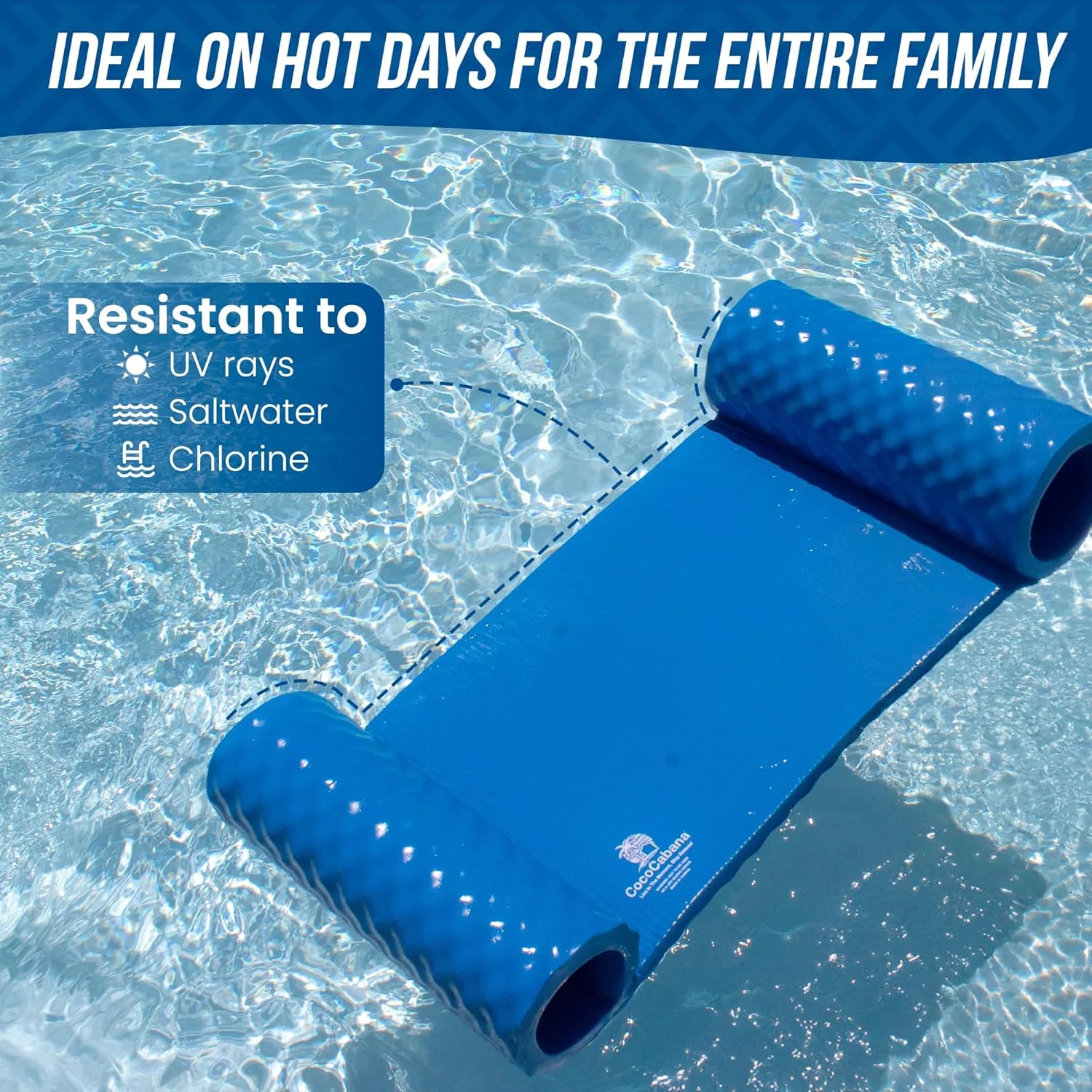
We're biased, sure — we make it. But the 4-in-1 Water Hammock is the float we point people to when they want one purchase to cover a whole summer of moods. It's built from closed-cell foam with a triple-dip vinyl coating — not inflatable plastic — so the rolls can never go soft mid-season, and there's no pump, valve, or patch kit anywhere in its life. The ribbed texture passes the grip test. The rolls pass the buoyancy test permanently, because foam doesn't lose pressure — there's no pressure to lose.
The numbers: 48 inches long, 24 inches wide, six pounds, $99.99 in Pacific Blue. The vinyl shrugs off sun, chlorine, and saltwater, so it's as at home on a lake weekend as it is in a backyard pool. Care is a rinse and a shady spot to dry. That's the entire ownership experience.
Two honest caveats. It comes in one color — if Pacific Blue doesn't work for you, we don't have a second answer yet. And 48 inches is a cradle, not a runway: the hammock holds you in a curve with your hips in the water, which is exactly the sensation you're buying. If what you actually want is six feet of flat, dry foam under your whole body, you want a lounger, not a hammock — more on that below.
How Do the Four Modes Actually Work?
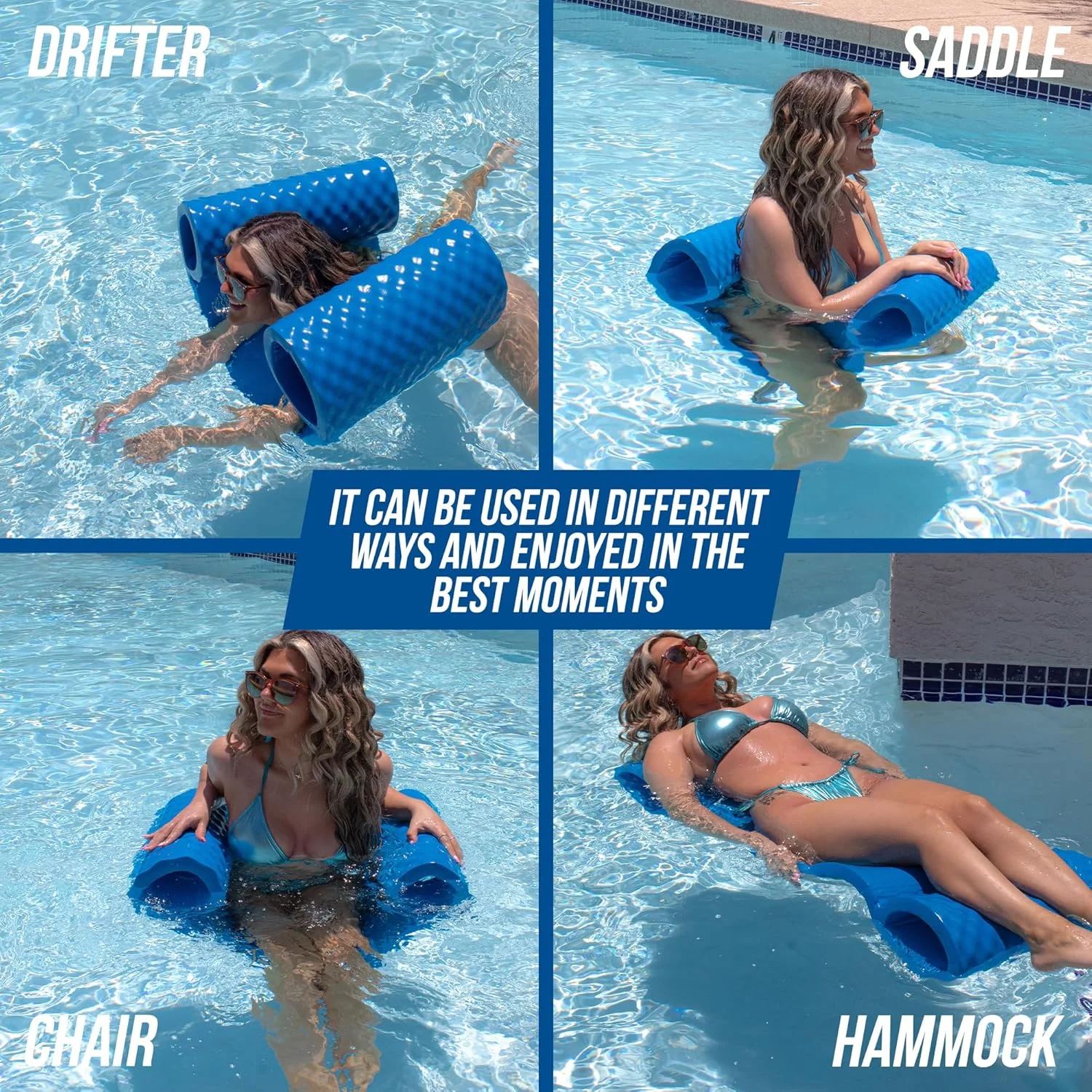
One geometry, four postures: you never adjust the float, you just change how your body meets it. The rolls and the dip stay exactly where they are — hammock, chair, saddle, and drifter are four different answers to "which part of you goes on the rolls?"
Hammock Mode: Head Up, Hips Low
Lie lengthwise — head on one roll, legs on the other — and the center dips so your hips settle a few inches into the water. This is the mode that names the float: shoulders dry, legs supported, everything in between gently cooled. It's the closest thing in the float aisle to the strung-between-trees feeling, and it's the mode you'll fall asleep in.
Chair Mode: Sit Back, Feet Forward
Shift your weight and the symmetry breaks: one roll becomes a backrest, the other a footrest, and the dip becomes your seat. It's a genuinely good reading position for an hour. It is not an all-afternoon throne — the rolls move as you move, and you'll re-center now and then. If sitting upright is 90% of your pool time, a dedicated chair beats this mode, and we'll say so below.
Saddle Mode: Sit Up and Socialize
Straddle it crosswise and the rolls tuck under your thighs, holding you chest-out of the water with both hands free. This is the hosting mode — eye level with whoever's on the steps, drink within reach, zero effort spent staying up. Expect to lose the float to whichever kid discovers this first.
Drifter Mode: Flat on Top
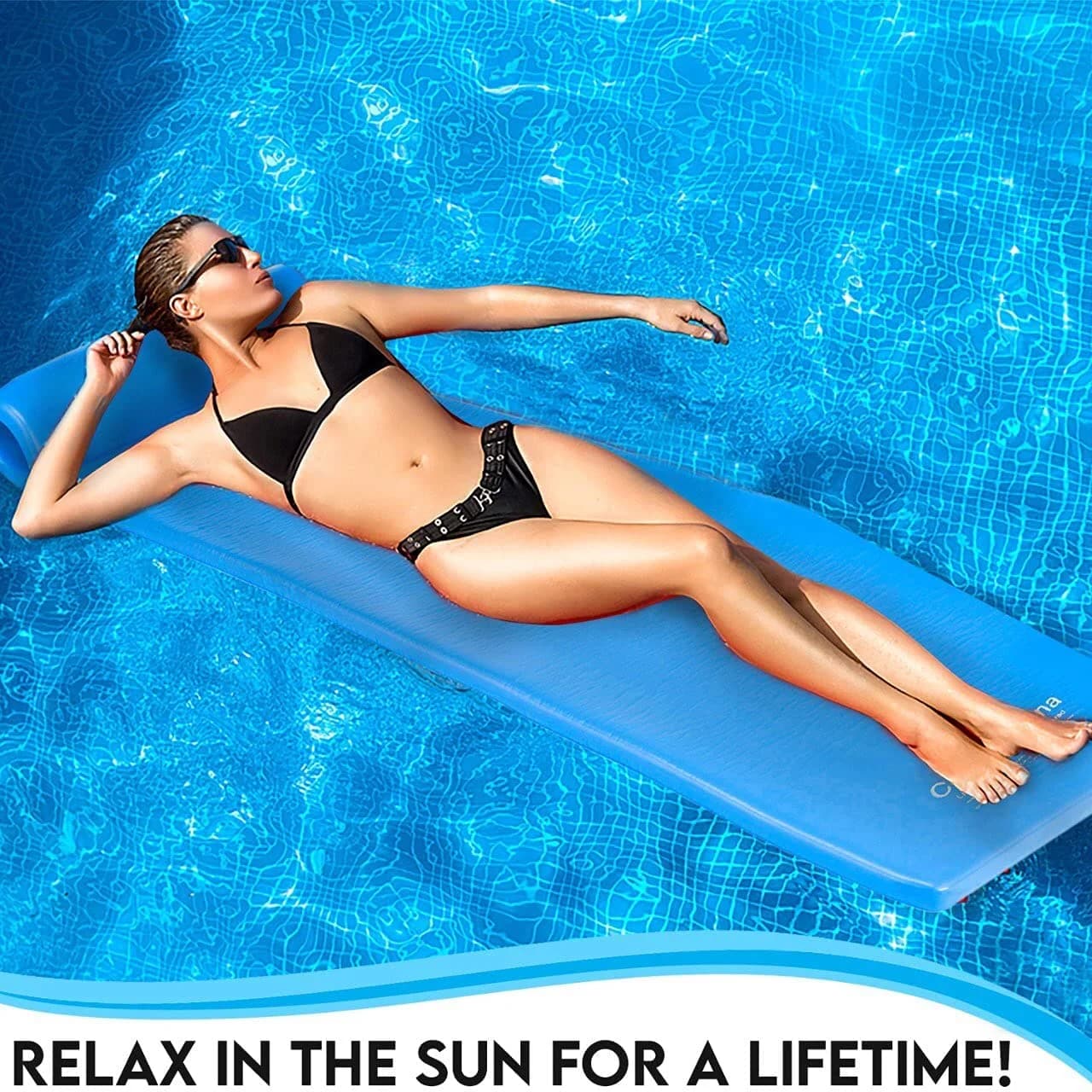
Lie across the whole float with your weight spread evenly and it flattens into a simple mat. It's the least clever mode and the most used by August — this is how you sun your entire back. The ribbed surface earns its keep here; a glossy float in drifter mode ejects you the moment you doze off.
You won't consciously pick any of these. Somebody walks in — you sit up. The sun moves — you flip over. The float's one job is to never make you climb off and swap equipment to do that.
Foam or Inflatable Water Hammock: Which Should You Buy?
Foam — for any hammock that lives where it's used, foam wins and it isn't close. An inflatable hammock costs less at checkout and packs into a suitcase, and that's the complete list of its advantages. Thin PVC rolls lose pressure across a long afternoon, and on a hammock the flotation going soft under your head is the part you notice first. Valves weep after a season of pressure cycling. UV chews the seams. Our foam version costs more up front and takes real shelf space, and it will still be holding its shape when the second and third replacement inflatables have gone to the patch kit.
The one buyer we'd honestly point to an inflatable: you're flying to a rental and the float has to fit in a duffel. Foam doesn't fold — that's the trade. Everyone else, buy once. We wrote the deeper comparison in our foam vs. inflatable pool floats guide, including the five-year cost math, if you want the full argument.
Match the Float to Your Pool Day
The hammock is the generalist. Every one of its four modes can be beaten by a float built for only that job — so be honest about how you actually spend your water time.
If You Mostly Nap: Get a Full-Length Lounger
For flat-out sunbathing, our 74-Inch Foam Pool Float beats the hammock, full stop. It's over six feet of closed-cell foam with an integrated headrest, in your choice of 1.5, 2, or 2.5-inch thickness — thicker floats higher — and it keeps your entire body just above the waterline instead of curved into it. Over six feet tall? This is your float, not the hammock.
If You Sit and Sip: Get a Real Chair
The hammock's chair mode is good; a true chair is better for the all-day sitter. The Paradise Foam Pool Chair is the specialist — sculpted backrest, armrests, and two molded cup holders that hold a full can without tipping. At $374.99 it's a real investment, and it's the one float in our lineup that makes the hammock's seat feel like a compromise.
If You Host: Add a Saddle
For pure social sitting, a dedicated saddle is lighter, cheaper, and more stable than the hammock's saddle mode. The Whale Tail Pool Float Saddle starts at $34.99, weighs next to nothing, and its ergonomic cutout keeps your center of gravity lower than rolled ends ever can. Buy two — whoever's in the water will fight over the first one.
If You Do Two or More of Those: Buy the Hammock
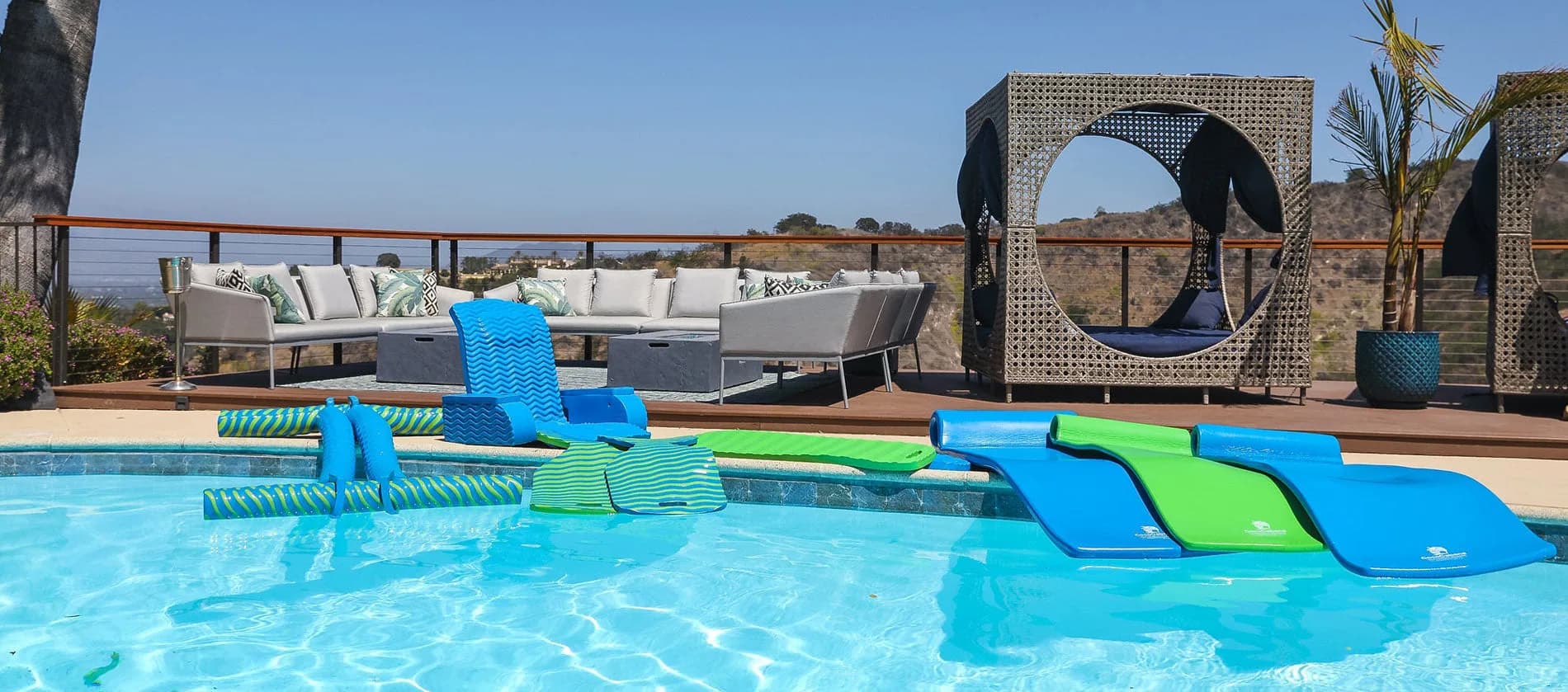
This is the real answer for most one-float households. If your Saturday runs read-then-talk-then-doze, the hammock replaces three purchases for $99.99 flat, and it's the only float on this page that never sends you swimming back to the deck to change moods. Tight on storage? Same answer — it's a 48-by-24-inch slab that leans against a wall or hangs on a single hook.
What People Are Actually Saying
The 4-in-1 holds a 4.0-star average from its first three reviewers. It's also built from the same closed-cell foam and triple-dip vinyl as our most-reviewed float, the 74-inch lounger — 4.5 stars across 255 reviews — so the construction has a long public track record. Here's what those owners say about the material the hammock is made of:
"AWESOME FLOAT. Love the color and it's thick enough to hold at least 225 lbs." — Rosalee S., on the 74-inch foam float
"We ordered these to float on the lake in Virginia. So far, they have held up very well." — Vincenzo T., on the 74-inch foam float
Foam that carries 225 pounds on a lounger is the same foam carrying your head and knees on the hammock.
A Quick Note on Care
Maintenance is a rinse. Fresh water after chlorinated or salt sessions, air-dry in the shade, store it out of direct sun — that's the entire routine. The one hard rule: never fold it, because foam creases are permanent. We wrote a detailed foam pool float care guide — daily rinses through off-season storage — if you want the long version.
Get One While the Water's Warm
Here's the mid-season truth about pool floats: the hottest weeks of the year are exactly when everyone else finally decides to buy one. Ordering in a heat wave means waiting out the best pool days of the summer. There's a lot of season left — spend it in the water, not in a shipping queue.
Browse the multi-use pool floats collection to see the hammock next to its cousins, or go straight to the 4-in-1 and let one float settle the lounger-versus-chair argument for good.
Because the best water hammock isn't the cheapest one or the cleverest-looking one. It's the one still cradling you — head dry, hips cool, drink within reach — three summers from now.